Find Your Voice
Speech Therapy
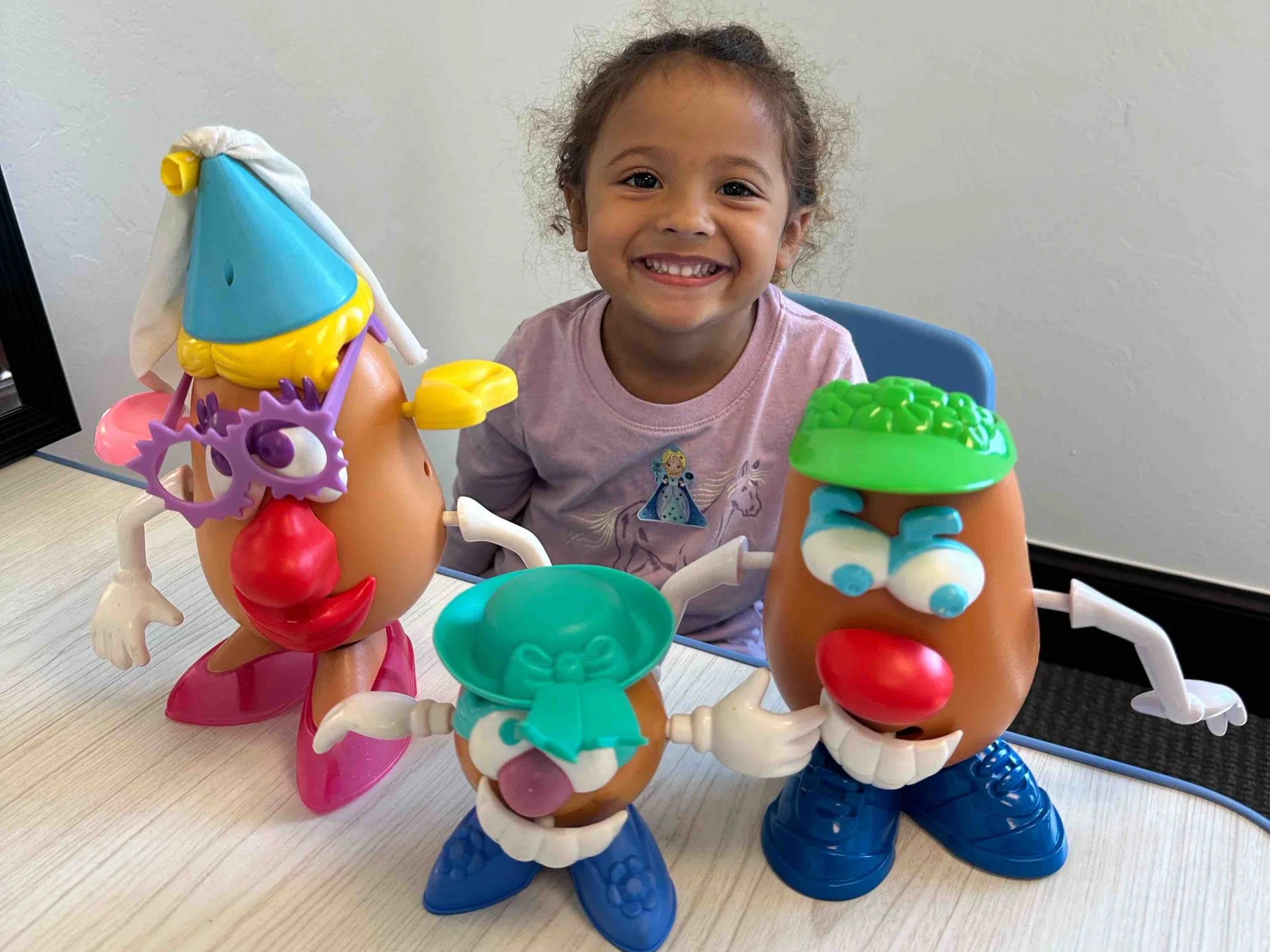
Every child has something to say. Our job is to help them say it.
At Forward Therapy, our Speech-Language Pathologists work with children of all ages, from toddlers taking their first steps toward communication to school-age kids building confidence in the classroom and beyond. We combine evidence-based practice with a genuine love for the children we serve, because we know that real progress happens when kids feel safe, supported, and understood.
And because therapy doesn't stop at our door, everything we do is designed to carry over into real life - at home, at school, and everywhere in between.
How We Can Help
Speech and Sound Production
Articulation Disorders: When certain sounds are tricky to produce (like "wabbit" instead of "rabbit"), we help children develop clearer, more confident speech one sound at a time.
Phonological Disorders: When a child consistently uses predictable patterns of sound errors (like leaving off the ends of words or swapping certain sounds for others), we help them reorganize those patterns into clearer, more accurate speech.
Childhood Apraxia of Speech (CAS): A motor speech disorder where the brain has difficulty coordinating the movements needed to form words, even when a child knows exactly what they want to say.
Dysarthria: When muscle weakness affects the clarity or volume of speech, we work to strengthen the underlying skills that support more understandable communication.
Language & Understanding
Expressive Language Delays: When a child struggles to find the words for what they're thinking or feeling, we help them build the language skills to express themselves with confidence.
Receptive Language Delays: When a child has difficulty processing what they hear, whether that's following multi-step directions, understanding questions, or keeping up in conversation, we work to strengthen the comprehension skills that make communication a two-way street.
Late Talkers: If your toddler isn't saying as many words as you'd expect, we can help figure out why and build a plan to get them moving forward.
Literacy & Phonological Awareness: Strong communication skills lay the groundwork for reading and writing. We support children in developing the phonological awareness they need to succeed in the classroom and beyond.
Social & Cognitive Communication
Social/Pragmatic Language: For children who find the unspoken rules of social interaction challenging (like taking turns in conversation, reading facial expressions, or staying on topic), we provide strategies that make connection feel more natural.
Autism-Related Communication: We provide individualized, strengths-based support for neurodivergent children, helping them communicate in ways that are meaningful, functional, and true to who they are.
Cognitive Communication: Communication isn't just about words. It also depends on attention, memory, and the ability to organize thoughts. We support children in developing these underlying cognitive skills so they can communicate more effectively in everyday situations.
Fluency & Voice
Stuttering (Fluency): For children who experience disruptions in the flow of their speech (repeating sounds, getting stuck on words, or feeling frustrated when the words won't come) we offer compassionate, evidence-based support that builds both fluency and confidence.
Voice Disorders: If your child's voice sounds consistently hoarse, breathy, too soft, or strained, there may be an underlying reason worth exploring. We work with children and families to identify the cause and restore a healthy, functional voice.
Feeding & Oral Motor
Learn more about Feeding & Oral Motor Disorders Here
Pediatric Feeding Therapy: Whether your child is an extremely selective eater, has sensory-based food aversions, or struggles with the mechanics of chewing and swallowing, we meet them exactly where they are and help them move forward at their own pace.
Orofacial Myofunctional Disorders: Habits like tongue thrusting or chronic mouth breathing can quietly affect the way a child speaks, swallows, and even how their teeth develop over time. We identify these patterns early and work to correct them before they become bigger concerns.